Reflections on the BiMO course by Clementine Mukanoheri
One of the most exciting aspects of the Biodiversity Monitoring Training and Mentorship Program (BiMO) was the opportunity to study stream ecology through hands-on fieldwork in the beautiful Amani Nature Forest Reserve in Tanzania’s East Usambara Mountains. For many trainees, this was more than a scientific exercise, it was an immersive experience that strengthened practical skills, deepened ecological understanding, and fostered appreciation for freshwater conservation.
During the training, we visited two streams, Mbomole (Chini Bar) and Kiganga, to assess their ecological health using aquatic macroinvertebrates. Working in teams, we explored different stream habitats, including rocky substrates, vegetation-covered sections, and gravel-sand-mud areas. The field activities were both challenging and enjoyable, requiring teamwork, careful observation, and problem-solving in natural environments.
A particularly memorable aspect of the training was learning how small aquatic organisms can reveal the health of an entire ecosystem. Through the use of kick nets and sampling equipment, we collected macroinvertebrates such as mayflies, stoneflies, caddisflies, dragonflies, and aquatic beetles. Observing these organisms firsthand helped us understand their ecological roles and why some species are sensitive to environmental disturbance while others are more tolerant.
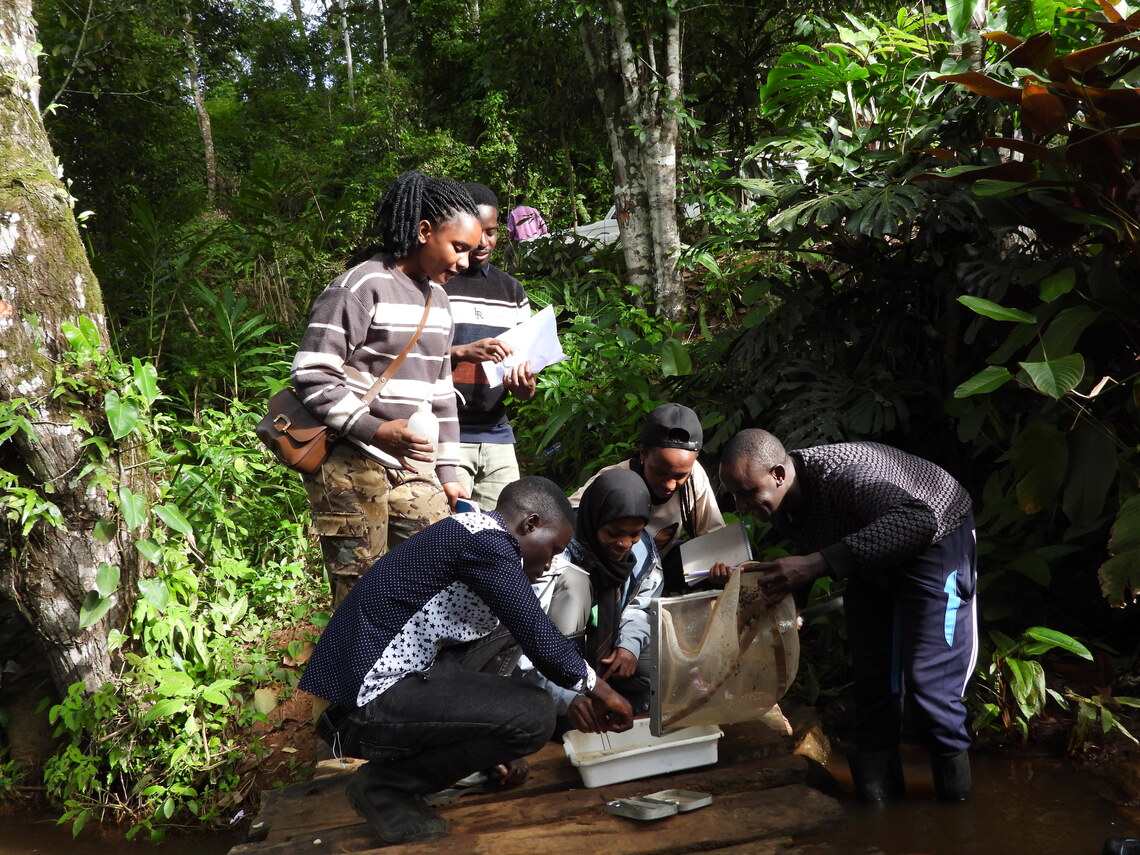
The training significantly enhanced ppersonal technical skills in biodiversity monitoring. Personally, I gained practical experience in field sampling techniques, specimen handling, taxonomic identification using microscopes (It became fun at some point), data recording, and ecological data analysis. Many participants also learned how to use stream health assessment tools such as the South African Scoring System (SASS-5) and the Average Score Per Taxon (ASPT), which are widely used for freshwater ecosystem monitoring.
Beyond technical skills, the exercise strengthened participants' ability to work collaboratively in multidisciplinary teams. Collecting samples, identifying organisms, and interpreting results required effective communication and coordination among group members. These experiences helped build confidence in conducting ecological assessments and presenting scientific findings.
The comparison between the two streams provided valuable lessons about the relationship between human activities and ecosystem health. We observed that streams located near settlements and agricultural activities showed signs of ecological disturbance, while streams within relatively intact forest habitats supported more sensitive aquatic organisms. This practical demonstration reinforced classroom concepts about biodiversity conservation, habitat quality, and sustainable natural resource management.
Another important outcome was the development of critical-thinking and scientific-inquiry skills. Participants were encouraged to formulate research questions, analyze ecological patterns, interpret statistical results, and draw evidence-based conclusions. This process improved our understanding of how ecological data can inform conservation decisions and environmental management. As an early-career researcher, this was a dream come true. Getting the opportunity to meet researchers, conservationists, and other experts was an exciting moment.
Overall, the stream ecology component of the BiMO training was an enriching and inspiring learning experience. It transformed theoretical knowledge into practical understanding while equipping participants with valuable field, analytical, and teamwork skills. The experience also strengthened participants' commitment to biodiversity conservation by demonstrating the importance of healthy freshwater ecosystems and the role of biological monitoring in protecting them. Through this training, we not only learned about stream ecology but also gained the skills and confidence needed to contribute to future biodiversity monitoring and conservation initiatives.